

CEO post: AI and Outdated Negotiation Frameworks
Why most negotiation frameworks will become obsolete within the next few years.
Over the past 12 months, I’ve been deeply immersed in applying artificial intelligence to negotiations — leveraging my background in Autonomous Navigation for Robotics.
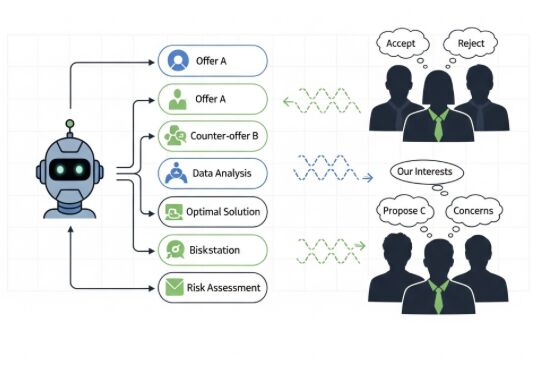
Our AI agent has conducted more than 1,000 procurement and negotiation experiments with over 6,000 vendors.
In parallel, we’ve reviewed negotiation methodologies published over the past 20–30 years by professors at leading universities.
The results of our experiments clearly show that most existing negotiation frameworks will become obsolete within the next 2-3 years.
Originally published at AI for Negotiations @ Substack
Why This Will Happen
1. Lack of statistical foundation
Most existing frameworks are based on the analysis of isolated cases and subjective experience. They rarely rely on large-scale data or statistically validated patterns. Many negotiation models were simply built around two or three examples — not around actual data.
2. Lack of quantitative thinking
Authors of traditional negotiation frameworks often lacked backgrounds in mathematics, formal modeling, or quantitative assessment of human behavior.
AI agents, however, make it possible to evaluate every move of the counterpart numerically — fundamentally changing the nature of negotiations.
3. The end of manipulative tactics
Many traditional negotiation frameworks rely on psychological manipulation.
With the arrival of AI agents and copilots assisting or participating in negotiations, such tactics lose their effectiveness.
Negotiations are becoming more mechanistic and data-driven.
4. The death of data arbitrage
In the past, negotiations were often won through information asymmetry — when one side knew more than the other.
AI agents can now instantly gather and analyze data, providing real-time insights and responses.
Access to information has become symmetrical, making data arbitrage increasingly irrelevant.
5. Changing time dynamics
Many traditional tactics relied on manipulating the pace of negotiations — speeding things up or slowing them down.
AI assistants largely neutralize this factor: both sides can now analyze and make decisions almost instantly.
What Comes Next
We’re actively collecting and analyzing statistics to validate our approaches.
But even now, I’m convinced that up to 80% of today’s negotiation frameworks will soon become irrelevant.
We’re entering a new phase — one where robot agents participate in negotiations.
As a result, the tactics and strategies we use today will need to be completely rethought.
In the coming posts, I plan to share insights and tactical patterns we’re discovering and reinventing through our ongoing R&D in negotiations.
Best regards,
12New.AI
CEO & Founder
Vitaliy Goncharuk
Linkedin – https://www.linkedin.com/in/vactivity/